
Italian Transcription
Why Italian Transcription is so hard to get right
Italian Transcription presents significant challenges when it comes to translating audio or written files into another language due to several intertwined factors. Firstly, the nuances of the Italian language, including its idiomatic expressions, cultural references, and regional dialects, often do not have direct equivalents in other languages, making word-for-word translations inadequate. Moreover, Italian transcription requires an in-depth understanding of context, tone, and intention behind the spoken or written content; failure to grasp these elements can lead to misinterpretations or loss of meaning. Additionally, the rhythm and flow of the Italian language can be difficult to replicate in other languages, as certain sounds and phonetic qualities are unique to Italian. This complexity is further compounded by the need for conformity to grammatical structures and stylistic norms that vary widely across languages. Consequently, translators must not only convey the literal message but also capture the essence and emotional weight of the original content, which demands a high level of expertise and linguistic sensitivity. Ultimately, the artistry involved in Italian transcription, combined with the logistical intricacies of language transfer, makes the process both challenging and time-consuming.
How Italian Transcription works
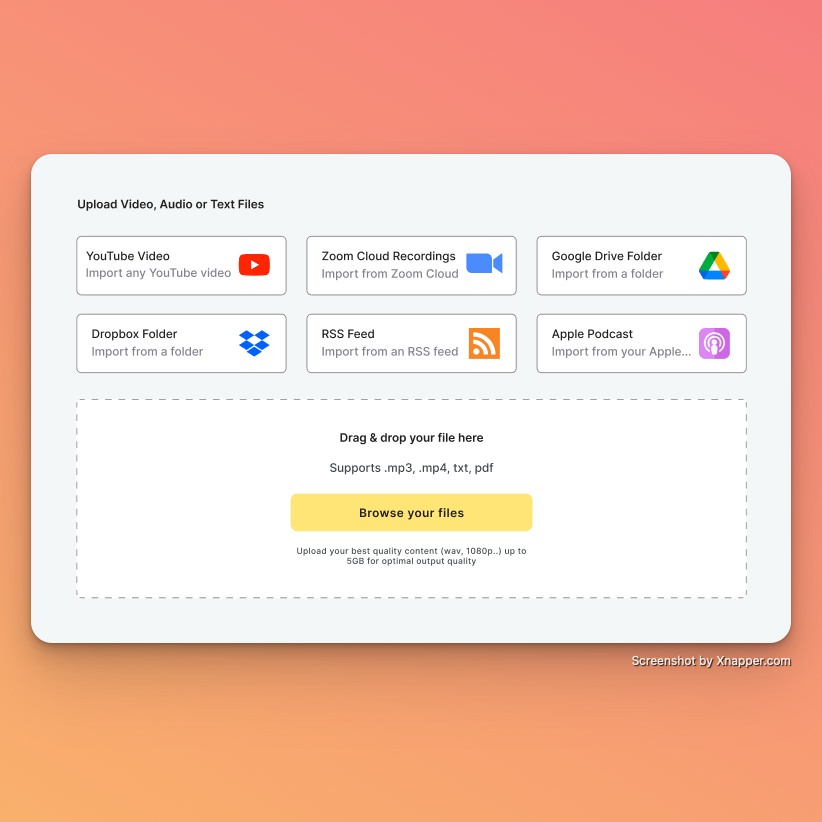
Unifire is a versatile tool that users can leverage for Italian Transcription, enabling them to convert spoken Italian language into written text accurately and efficiently. This tool is particularly beneficial for linguists, students, and professionals who require precise transcriptions for various purposes, such as academic research, language learning, or documentation of interviews and meetings. With its user-friendly interface, Unifire facilitates easy access to transcription services, allowing users to focus on content creation and communication without the daunting task of manual transcription. Consequently, users engaged in different fields can enhance their productivity and ensure that their Italian audio content is captured in a readable and shareable format.
Users utilize Italian transcription primarily to convert spoken Italian language into written text, facilitating improved comprehension and accessibility. This functionality is particularly beneficial for individuals studying the Italian language, as it allows them to capture spoken nuances and patterns in real-time, enhancing their listening and writing skills. It is also invaluable for professionals in fields such as journalism, law, and academia, who need accurate records of conversations, interviews, or lectures in Italian. Moreover, transcription supports inclusivity for those who are deaf or hard of hearing, providing them the ability to access spoken content in a written format. Additionally, tourists or expatriates may rely on transcription services to document interactions or important information during their travels in Italy. Ultimately, Italian transcription serves a wide array of users by bridging the gap between spoken communication and written documentation, making the language more accessible and easier to engage with across various contexts.
Unifire combines transcription, translation and AI content generation
Unifire combines a beautiful AI writer with the best transcription service, translation workflows and AI content templates. Start with Italian Transcription and level up with Unifire.ai
An ultra-powerful AI writer
Summarise, extend, shorten and whatever you can imagine with our powerful AI editor. You can work with your content with maximum efficiency and full collaboration.
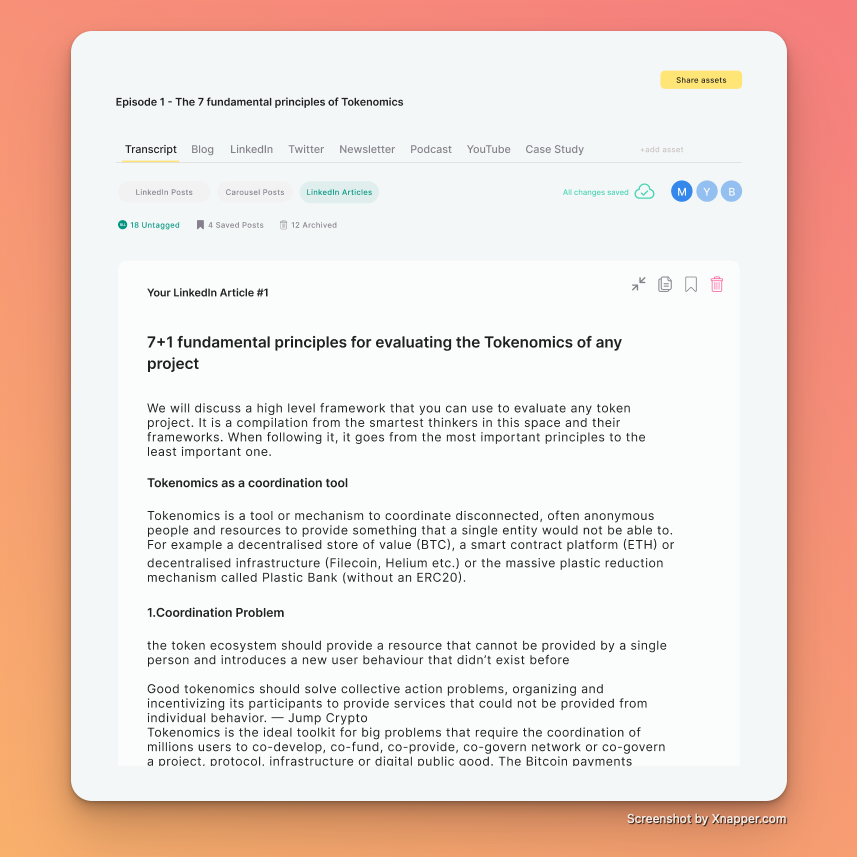
32 different output formats
With Unifire, you can turn and repurpose anything into anything. One audio recording can become an e-book, 40 LinkedIn posts, an email newsletter, a lead magnet, or every Twitter asset with one click of a button.
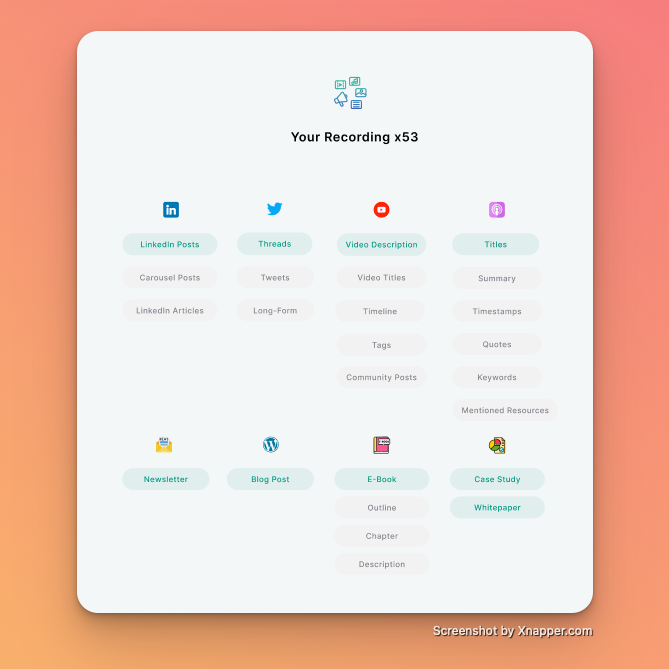
Build for your entire team
Unifire comes with unlimited team members, workspaces, collaborative live editing and double backups for all your content.
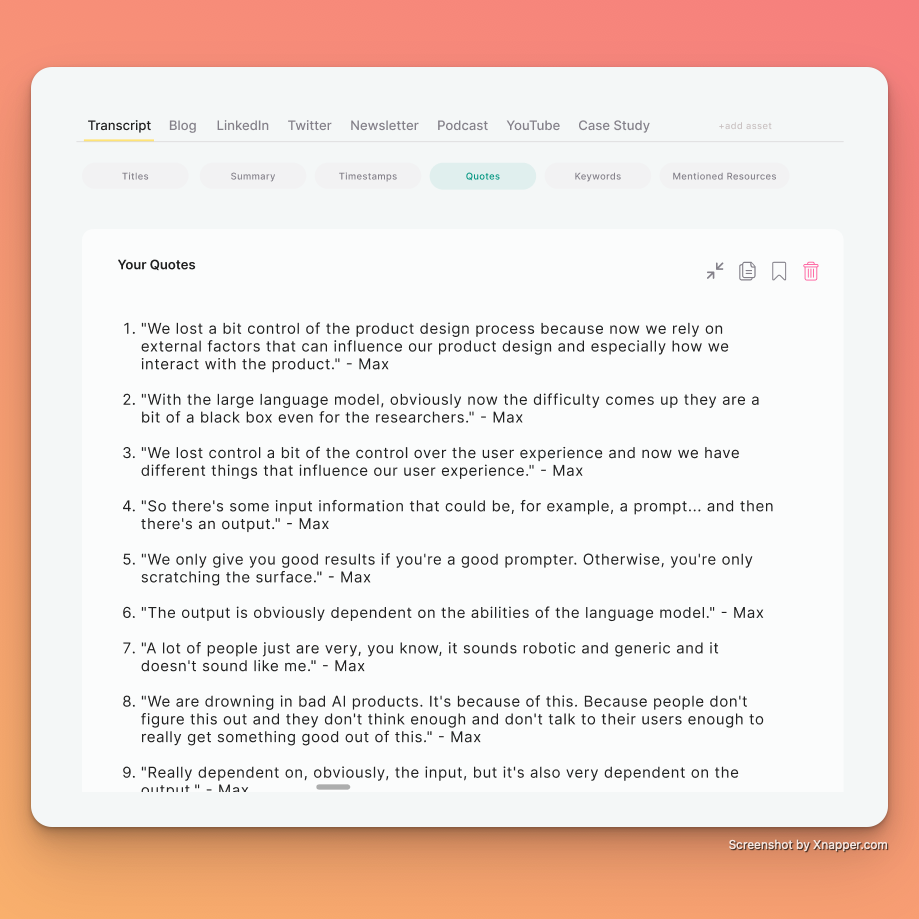
Upload any formats you can imagine
You can feed Unifire audio recordings, videos, webinars, transcripts, documents and PDFs. Everything can be repurposed.