
Transcript In Chinese
Why Transcript In Chinese is so hard to get right
Transcript in Chinese presents a unique challenge when it comes to translation due to several intricate factors. First and foremost, the complexities of the Chinese language itself, with its rich tapestry of dialects, tones, and characters, can make it difficult to convey the exact meaning of the original text, especially if the transcript includes culturally specific references or idiomatic expressions. Additionally, the formatting of transcripts—often containing speaker labels, timestamps, and non-verbal cues—complicates the translation process, as these elements must be preserved to maintain the flow and context of the dialogue. Furthermore, the nuances of speech, such as humor, sarcasm, or emotional undertones, may not have direct equivalents in Chinese, leading to potential misinterpretations. The challenge is further exacerbated by the need for cultural adaptation; certain concepts or terminologies may require contextual adjustments to resonate with a Chinese-speaking audience. Thus, translating a transcript into Chinese is not merely a linguistic conversion but a complex process that demands cultural sensitivity, linguistic precision, and an understanding of the original communication’s intent.
How Transcript In Chinese works
Unifire serves as a powerful tool for users looking to generate and translate text efficiently. With its sleek and user-friendly interface, individuals can utilize Unifire to effortlessly create written content tailored to their specific needs, whether it be for professional documents, creative writing, or educational materials. Additionally, the platform allows users to translate text seamlessly into various languages, including Chinese, making it an invaluable resource for global communication and outreach. This capability is particularly useful for businesses, educators, and content creators who require accurate and timely translations to connect with diverse audiences. Overall, Unifire stands out as a versatile solution for anyone seeking to enhance their writing and translation processes.
Users seek the functionality of generating a transcript in Chinese for several key reasons. Firstly, it allows them to access and comprehend information presented in audio or video formats, breaking down language barriers for Chinese speakers or learners. This capability is especially valuable in educational settings, where students can benefit from having lecture content available in their native tongue. Additionally, businesses and professionals often require transcripts for meetings or presentations to ensure clear communication with Chinese-speaking stakeholders, enhancing collaboration and efficiency. Furthermore, as global interactions increase, individuals may also turn to this function to better connect with Chinese culture and improve their language skills, making the transcript a vital tool for both personal and professional growth. Overall, generating a transcript in Chinese serves as a crucial means of facilitating understanding, fostering communication, and promoting cross-cultural exchange.
Unifire combines transcription, translation and AI content generation
Unifire combines a beautiful AI writer with the best transcription service, translation workflows and AI content templates. Start with Transcript In Chinese and level up with Unifire.ai
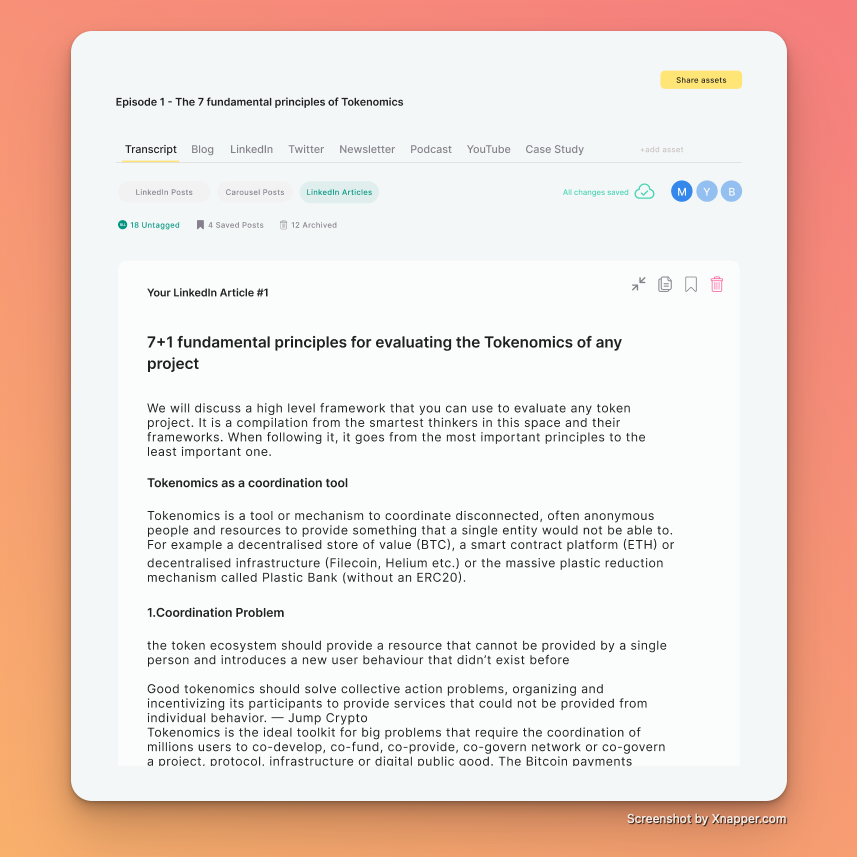
An ultra-powerful AI writer
Summarise, extend, shorten and whatever you can imagine with our powerful AI editor. You can work with your content with maximum efficiency and full collaboration.
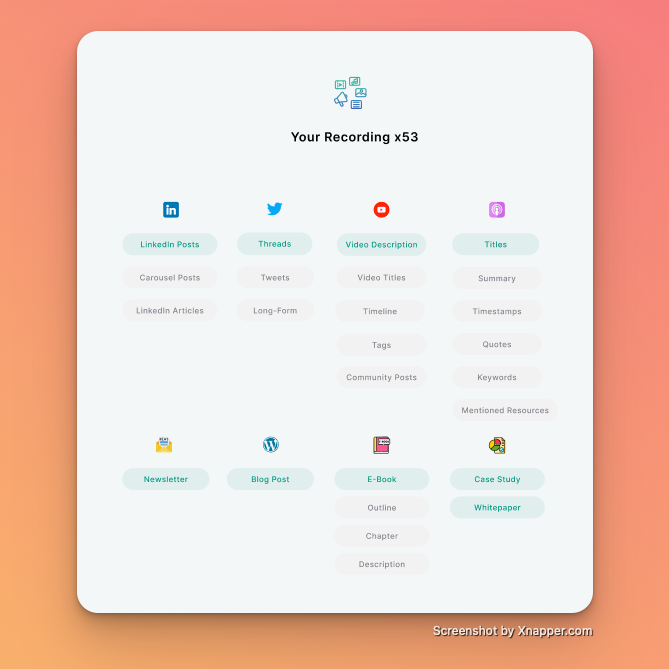
32 different output formats
With Unifire, you can turn and repurpose anything into anything. One audio recording can become an e-book, 40 LinkedIn posts, an email newsletter, a lead magnet, or every Twitter asset with one click of a button.
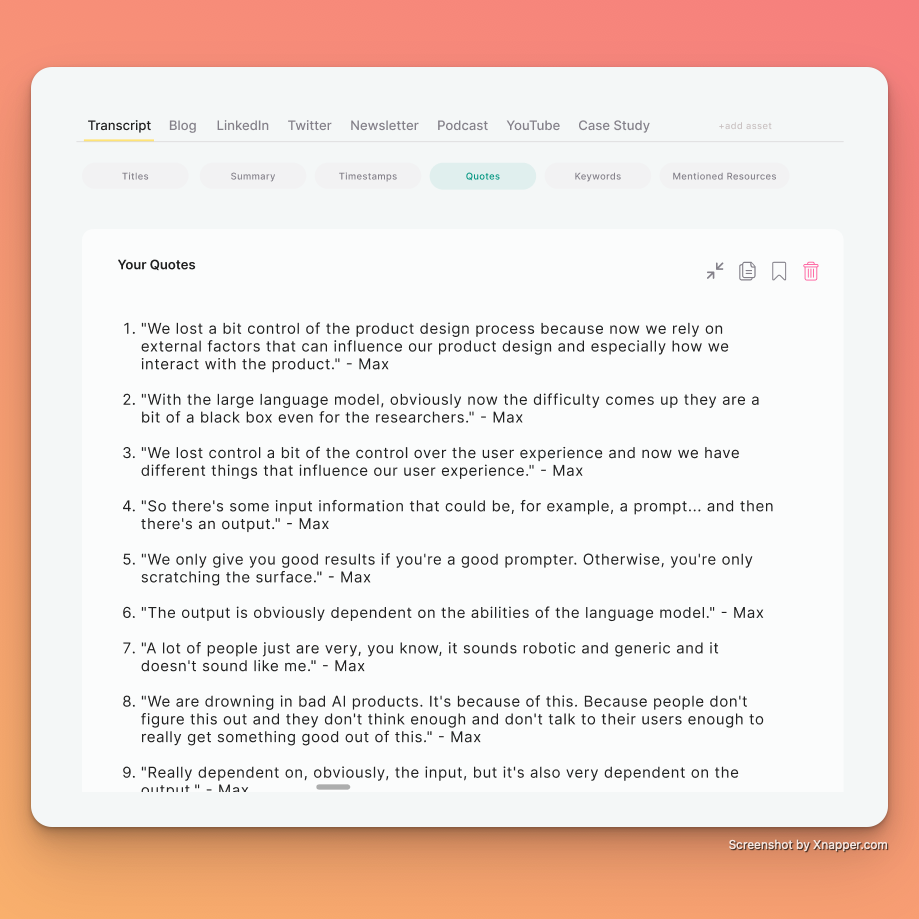
Build for your entire team
Unifire comes with unlimited team members, workspaces, collaborative live editing and double backups for all your content.
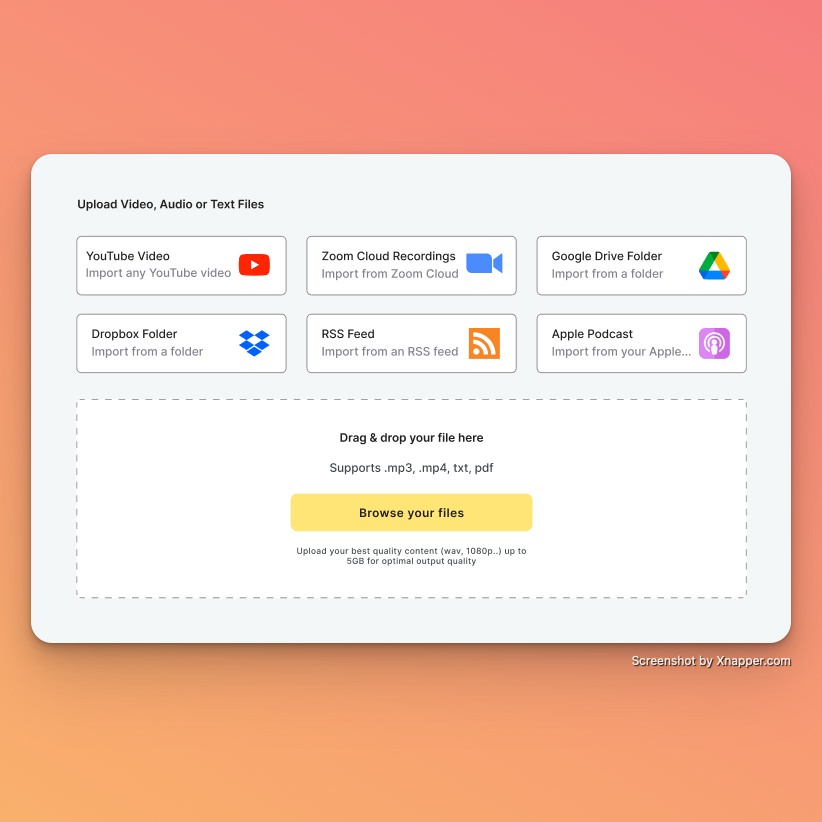
Upload any formats you can imagine
You can feed Unifire audio recordings, videos, webinars, transcripts, documents and PDFs. Everything can be repurposed.